
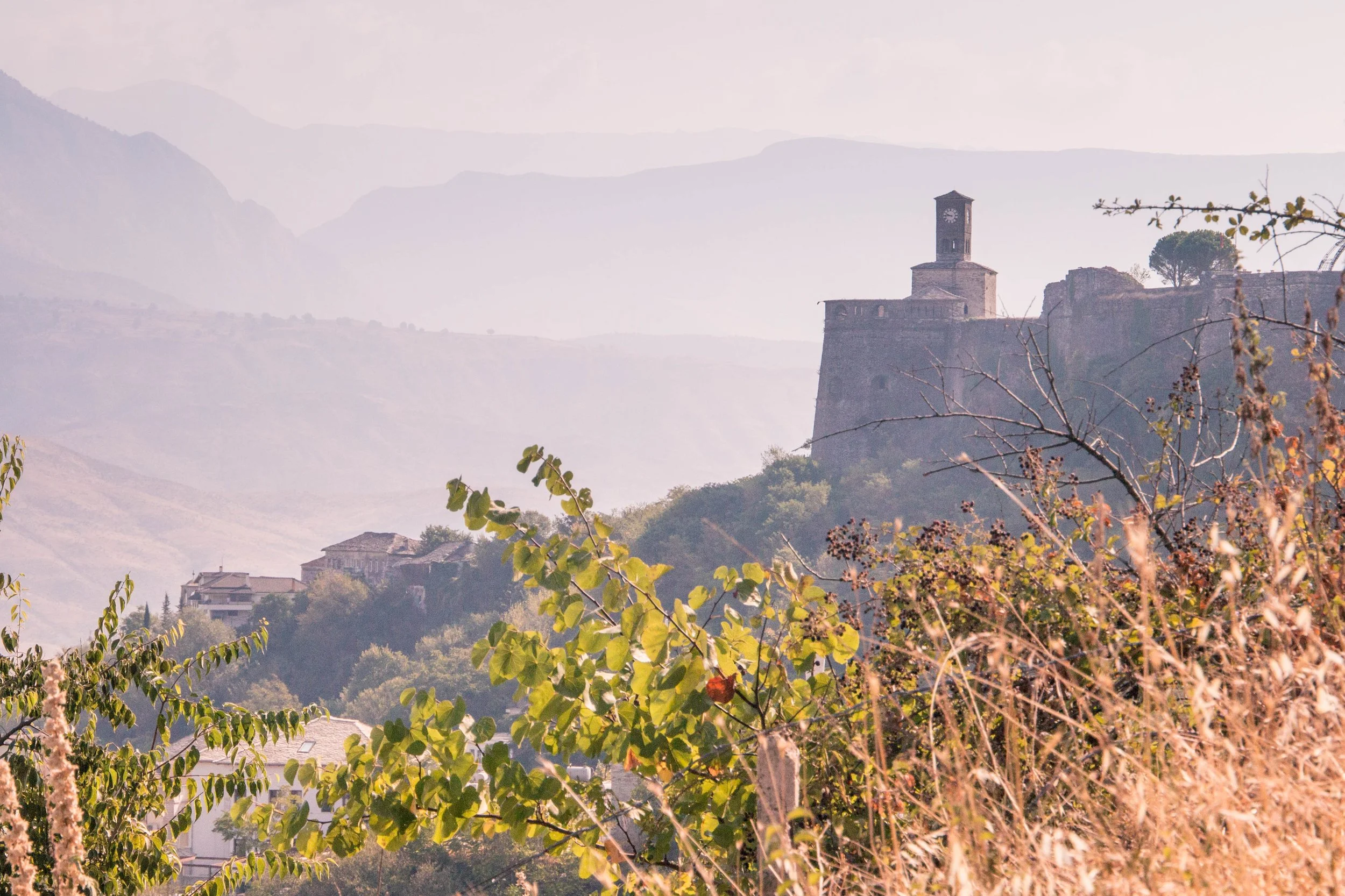
3 daytrips from
Gjirokastra
Albania’s mountain-side Ottoman-era heritage city
Gjirokastra has a fantastic location. If you’ve already seen my suggestions for places to visit in Gjirokastra’s old town, you may be looking for some ideas for short trips out of town around the Drinos Valley.
Antigonea
The entire Drinos valley was part of a thriving Greco-Roman trading corridor in ancient times, and is rich with archaeological discoveries. Antigonea is one of the biggest, a massive fortified city founded around 295 BC by the Molossian king Pyrrhus (best known for giving us the term “Pyrrhic victory”). He named the city for his wife, Antigone, a relative of King Ptolemy of Egypt. It was a major city with neatly planned, paved streets, lavish mansions and 4km of city walls. It occupies a dramatic location in the Drinos valley, on the opposite side of the valley from Gjirokastra.
Pyrrhus fought against Roman expansion into the area. Ultimately, however, a Roman army marched through the valley, sacked Antigonea and partially razed it. Antigonea was forgotten, overgrown and buried under farmland.
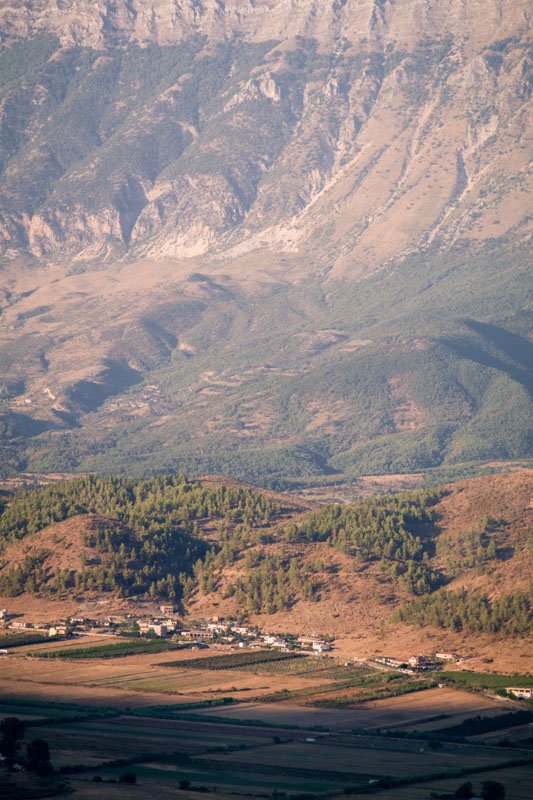
For centuries historians and archaeologists knew of Antigonea but did not know where it was located. It was finally rediscovered during excavations in the 1960s and 1970s, with the discovery of silver and bronze tablets bearing inscriptions. The site itself is huge and spread out. It’s only partially excavated, but outlines of former street grids can be seen, along with ruined foundations and columns, and the ruins of a 5th century Byzantine church built after the fall of the Roman empire.
The remains sprawl over grassy farmland, dotted with trees. As it’s spread out, expect plenty of walking over grassy areas, and an uphill walk to get there if approaching on foot. Allow plenty of time to see everything. It’s almost certainly better experienced in cooler months - by late summer the entire valley is dry and dusty and baking in the summer heat.
It’s about a half-hour drive from Gjirokastra, sealed all the way and crossing through several villages. If you have your own transport, access is straightforward, otherwise you can arrange tours with local taxi firms or travel agents in Gijrokastra. Opens daily, shorter hours at weekends. Admission fee applies.
There’s a great account of visiting Antigonea independently here with lots of photos, and further photographs and information about the history can be found here.
Kordhoca Bridge
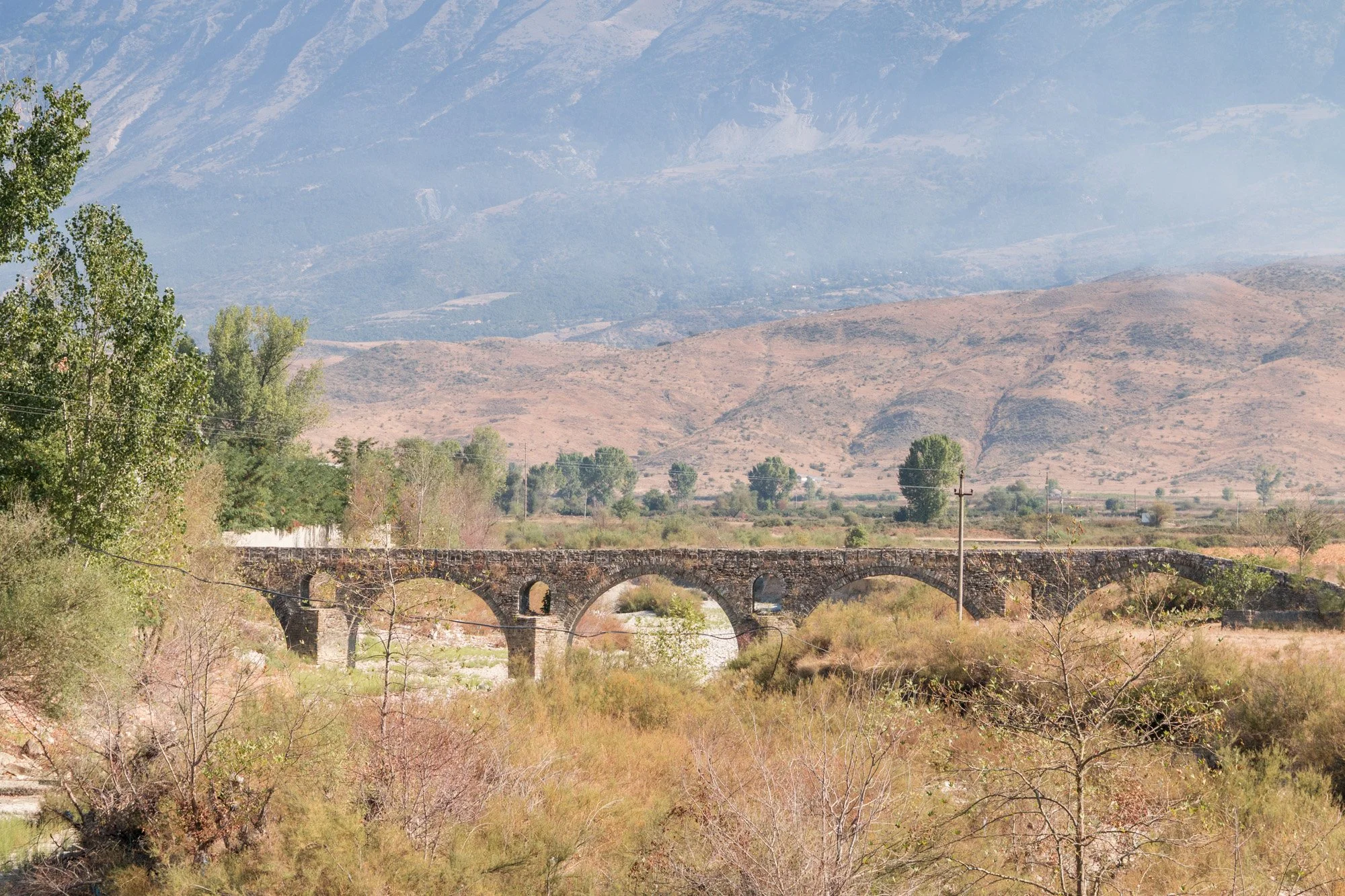
This is a lovely bridge dating from 1820 with a pretty backdrop, found about 5km south of Gjirokastra and clearly visible from the main road and bus route.
If you have your own transport, visiting here is fairly simple and takes only a few minutes to visit. Otherwise it’s within walking distance from Gjirokastra city, if you don’t mind a round trip of 10km. The mountain ridge behind the bridge runs south-east to north-west, so is capable of catching the light in both morning and evening. In the mornings in summer there is often a haze hanging in the distance.
By late summer the river bed may be completely dry.
Hadrianopolis
After the fall of Antigonea city, the Drinos valley area itself continued to thrive under the Romans. It was part of a key trading corridor and centre for agriculture, after all. The Romans built their own major city, Hadrianopolis. After the fall of the eastern Roman Empire, the region continued on under the newly emerging Byzantine Empire, but eventually the Roman settlements were abandoned. Like Antigonea, Hadrianopolis was lost. Although archaeologists knew of its existence (because lots of Romans had written about it) they did not know where to look.
In the 1970s, however, a mudslide revealed the remains of a Roman theatre in the bottom of the Drinos valley, which was eventually identified as Hadrianpolis. The discovery generated excitement amongst scholars, because it challenged the prevailing belief that the Romans always selected elevated hilltops, and never sited their cities at the bottom of a valley.
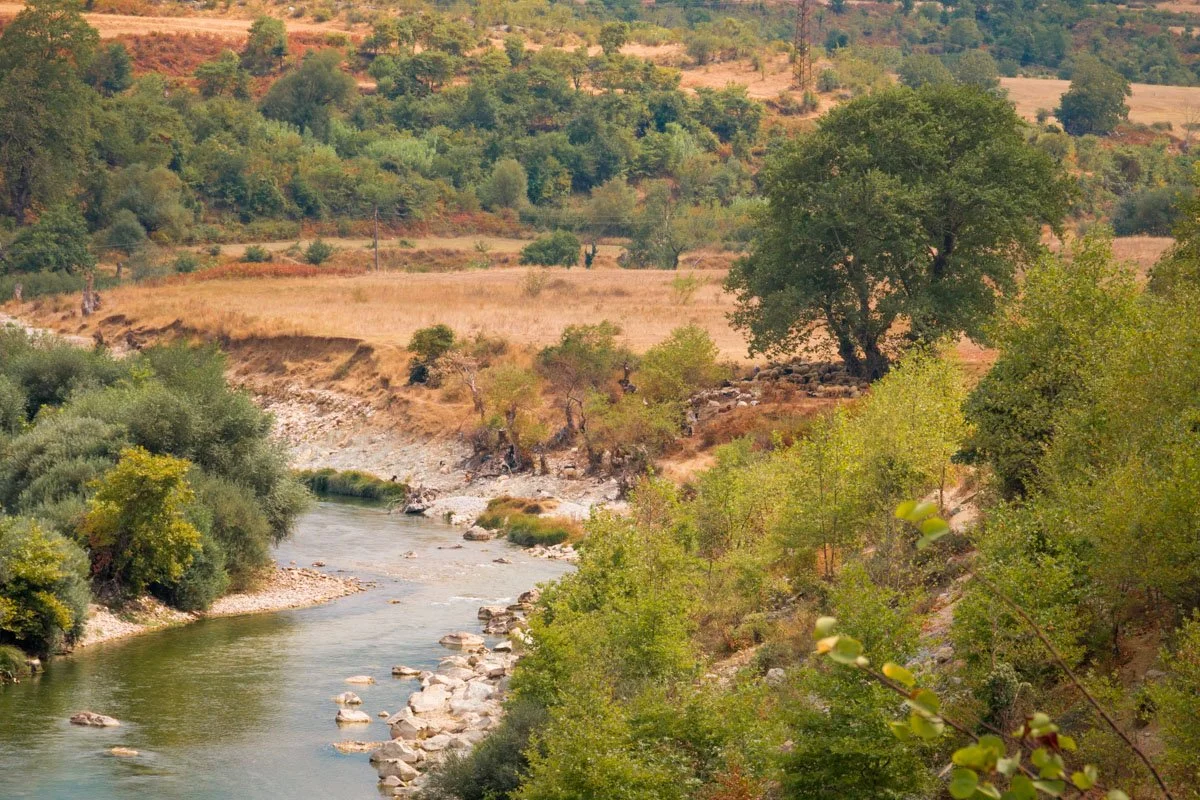
Hadrianopolis is partially excavated and the outlines of buildings and streets are visible, along with the remains of the Roman theatre. Like Antigonea, Hadrianopolis occupies a rural setting, surrounded by magnificent hills of the Drinos valley. There’s a great account of visiting Hadrianopolis independently here, with lots of photographs.
Hadrianopolis is near Sofratika village, outside Gjirokastra. There’s a country lane from Sofratika which is walkable. Sofratika itself is reachable from Gjirokastra by bus. Alternatively you can arrange transport or a tour with taxis or travel agencies in Gjirokastra. A trip here can be combined with a trip to Antigonea to make a longer half-day or more.
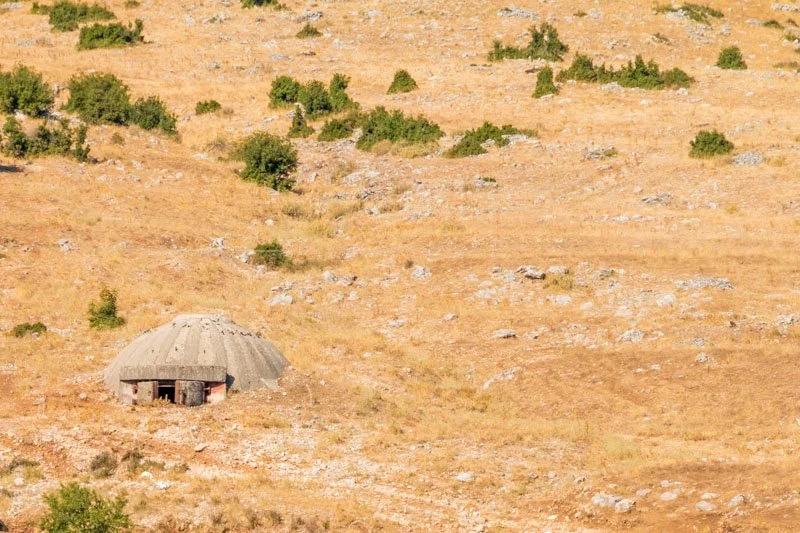
Bunkers
Finally, while you’re exploring the area, keep an eye out for Albania’s famous bunkers, which are dotted around the entire country. Read more about the bunkers here.