
Vesterålen
for photographers
Off the beaten track in Arctic Norway
Looking for magnificent coastal Arctic scenery, but without the crowds of people? Vesterålen is the archipelago of islands right above Lofoten, overflowing with magnificent scenery just off the north-west coast of Norway. Should you visit? I’ve produced a complete guide for landscape photographers interested in exploring.
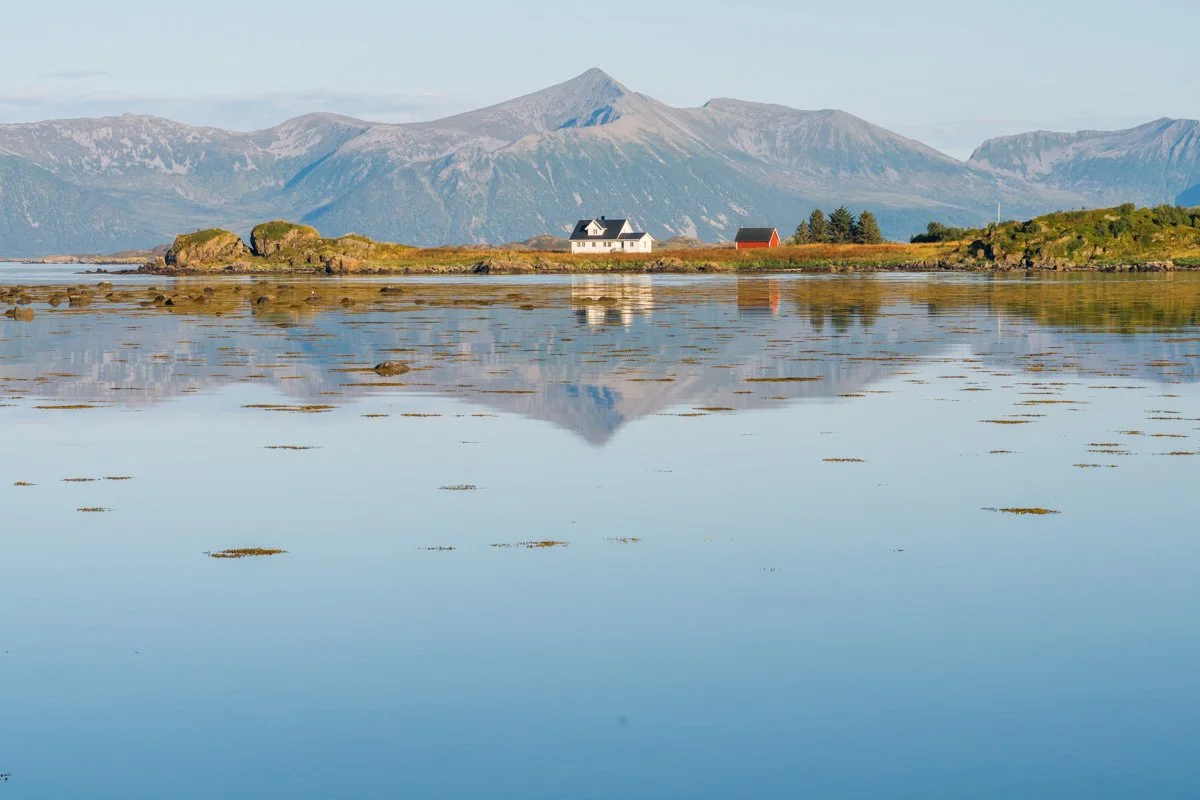
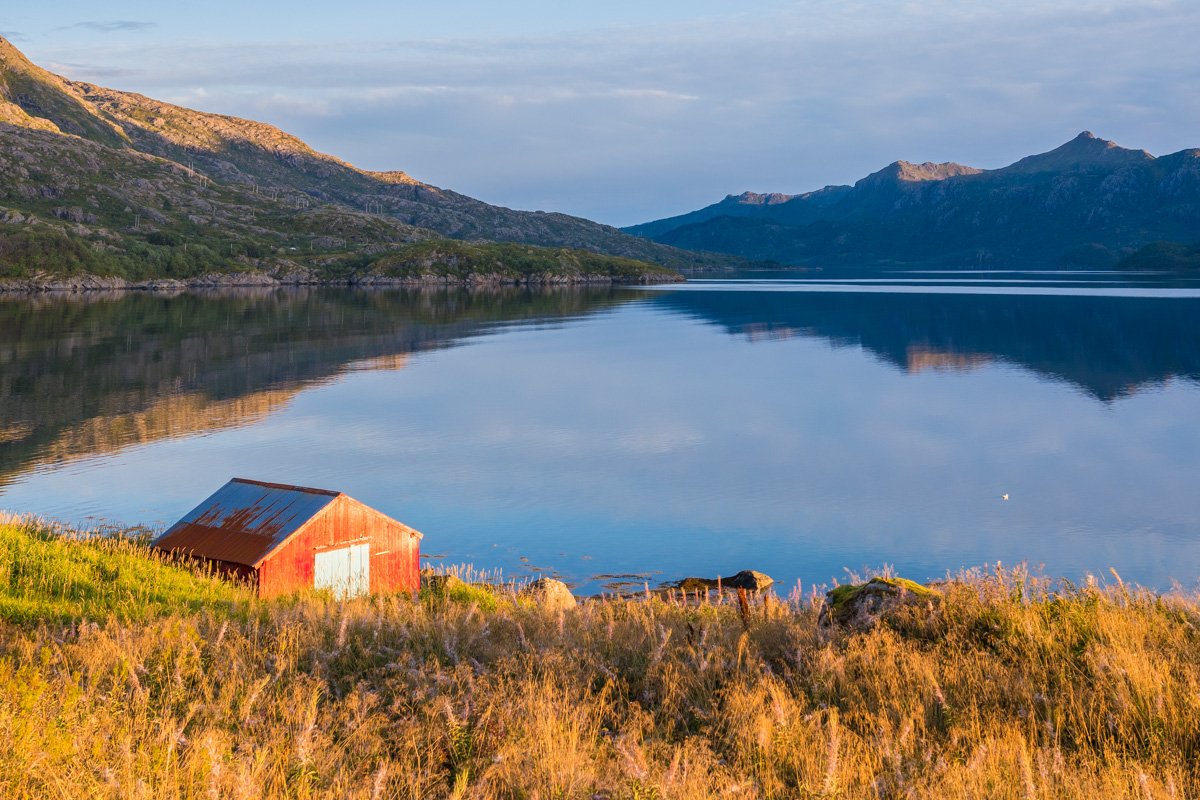
I absolutely loved Vesterålen! Like its neighbours Lofoten and Senja, in Vesterålen you can expect dramatic, rocky coastlines, triangular mountain peaks, painted fishing cabins and sublime turquoise seas. But Vesterålen has a distinctly different flavour to the rest of Norway’s Arctic coast. Here you can also expect meadows bursting with summer wildflowers, alongside lush wetlands, lagoons and curious wildlife. A visit to Vesterålen is a first-rate complement to a trip around Norway’s Arctic, and can easily be combined with other destinations via ferry.
Is Vesterålen worth visiting? Here’s a guide for visitors interested specifically in landscape photography. I’ll talk about Vesterålen, which is the whole archipelago of islands, before taking a look at the Andøya Scenic Route specifically, (one of Vesterålen’s top attractions for landscape lovers). On this page you can jump to:
Should you visit Vesterålen?
Are you undecided about whether to pay a visit? I will explain my reasons below, but for now I would say that Vesterålen is absolutely worth visiting…
If you love the idea of Lofoten-esque scenery, but with a bit more of a varied landscape, or
If you’d love to see some wildlife on your Arctic trip (Vesterålen is home to one of the world’s top whale-watching spots, and also home to puffins, sea eagles, moose and more), or
If you enjoy a quiet, relaxed trip and want to take your time exploring somewhere less crowded, or
If you are planning to visit Senja from Vesterålen via the summer-only ferry for a road trip, or
If you love white sand beaches
Vesterålen doesn’t (yet) have viewpoints that have become Insta-famous, so if you are keen to visit the well-known viewpoints you’ve seen on Instagram, then Vesterålen might not be your first port of call (Lofoten may suit you better). On the other hand, if the above sounds like you, read on for more! One of Vesterålen's greatest strengths is being able explore and create your own unique compositions at new locations that you haven’t yet seen online.
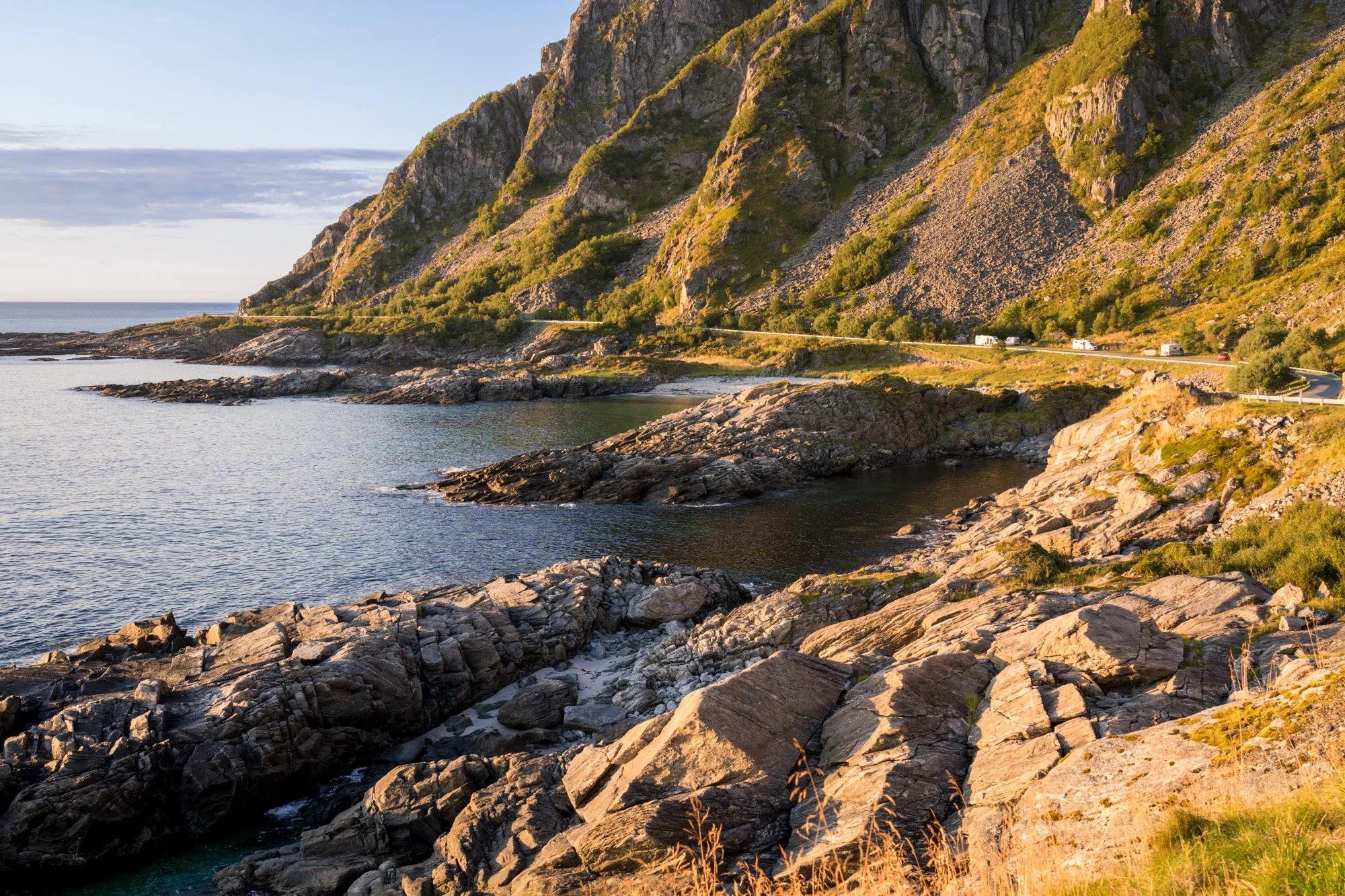
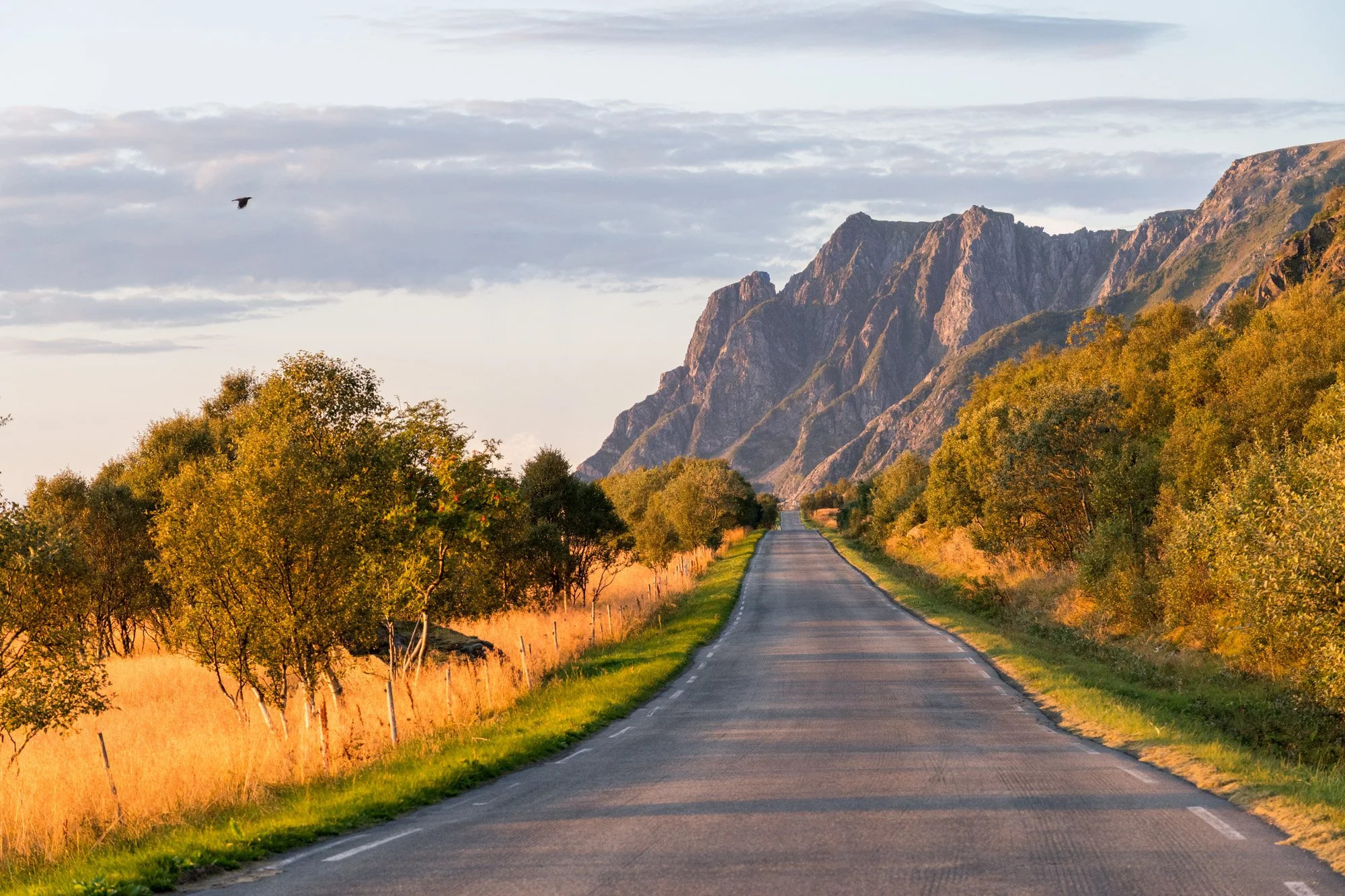
Andøya’s National Tourist Scenic Route can deliver on varied scenery
About Vesterålen
Vesterålen covers a fairly large area, spanning numerous islands with convoluted shapes.
The best-known island within Vesterålen is probably the northernmost one - the long, thin island of Andøya. At the northern tip of Andøya is a breezy whale-watching centre called Andenes, facing north towards Svalbard. Andenes is connected via a summer-only ferry to Senja, another of Norway’s stunning Arctic islands, and it’s possible to create a terrific multi-island road trip via ferry (be aware that if you want to do this, you will need to plan ahead carefully). Andenes is also one of the endpoints of one of Norway’s 18 National Tourist Scenic Routes, which runs along the western shore of Andøya island - see below for more about this.
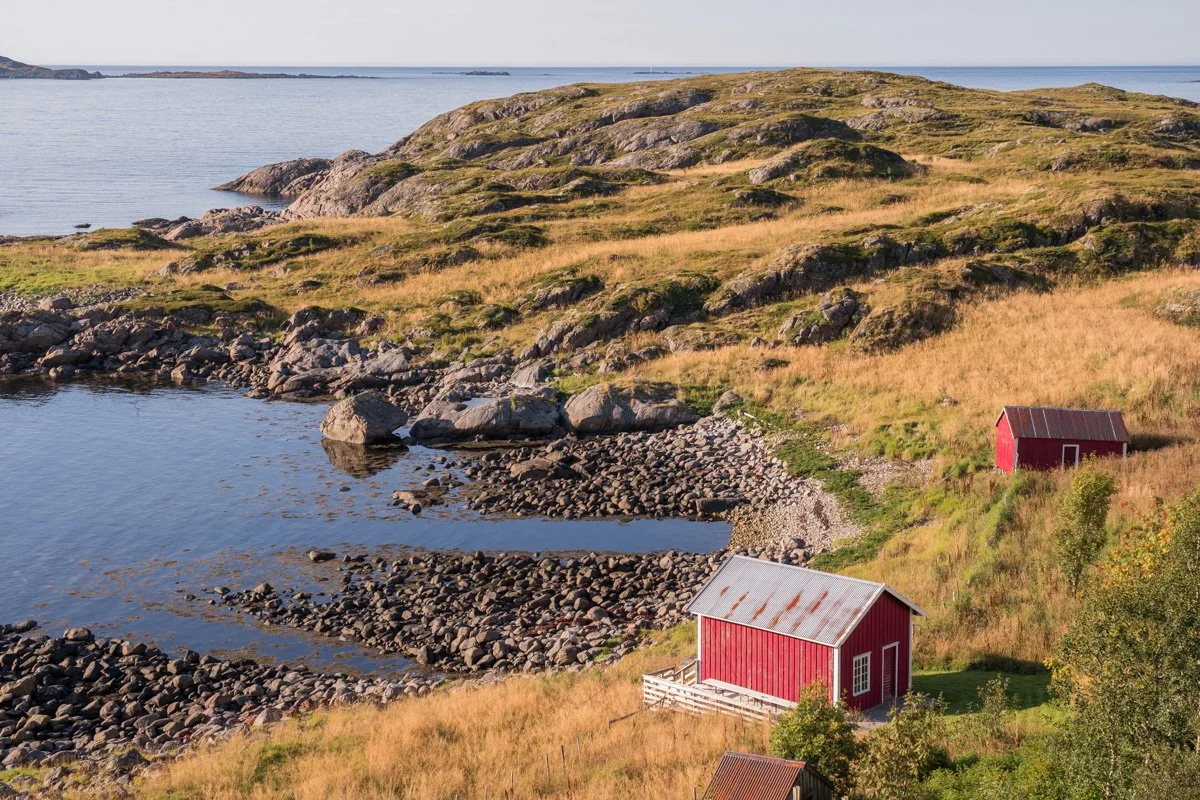
South of Andøya is the much larger island of Langøya. Langøya has a very sensible, crescent-shaped eastern shore, while its western face is a wriggly squiggle of fjords, dotted with quiet hamlets, red cabins and tiny rowboats. At the northern end of Langøya are several, quite different, isolated fishing villages and some smashing scenic drives that most people have never heard of. My photographer’s introductory guide to Langøya is here.
At the southern end of Vesterålen is the oval-shaped Hadseløya island, home to one of the larger towns (Stokmarknes) and connected via a short ferry ride to Lofoten. Andøya, Langøya and Hadseløya are all connected via bridges and readily drivable. If you are in the mood for a road trip that combines 3 of Norway’s National Tourist Scenic Routes, see my suggested itinerary here.
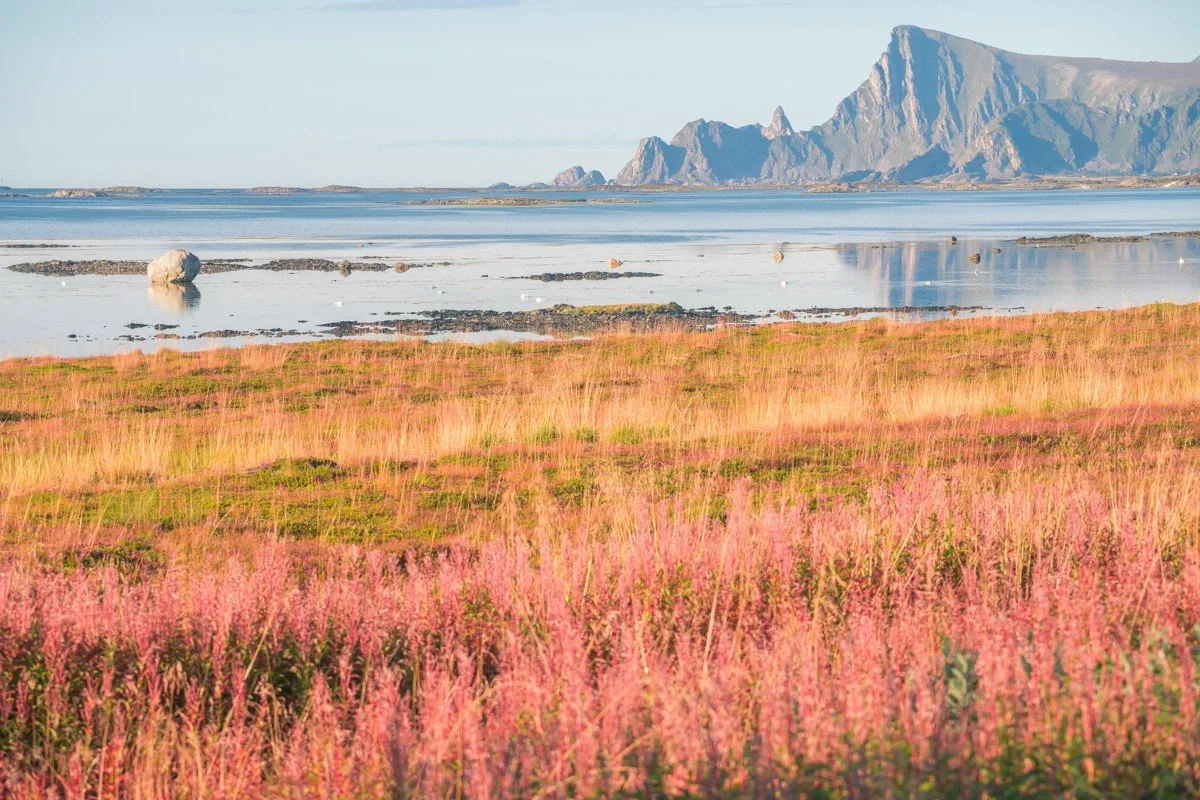
How does Scenic Route Andøya compare to Scenic Route Lofoten?
The National Tourist Scenic Routes are 18 driving routes that offer particularly unusual, interesting or beautiful scenery, considered some of the best drives in the country. One of the top attractions in Vesterålen is the National Scenic Route on Andøya island, which should be high on your list if you are interested in photographing Vesterålen’s landscapes.
It’s natural to wonder how the Andøya Scenic Route compares to Lofoten - Lofoten is one of the most-Instagram-famous locations in Europe and it’s right next door! What does the Andøya Route offer in comparison?
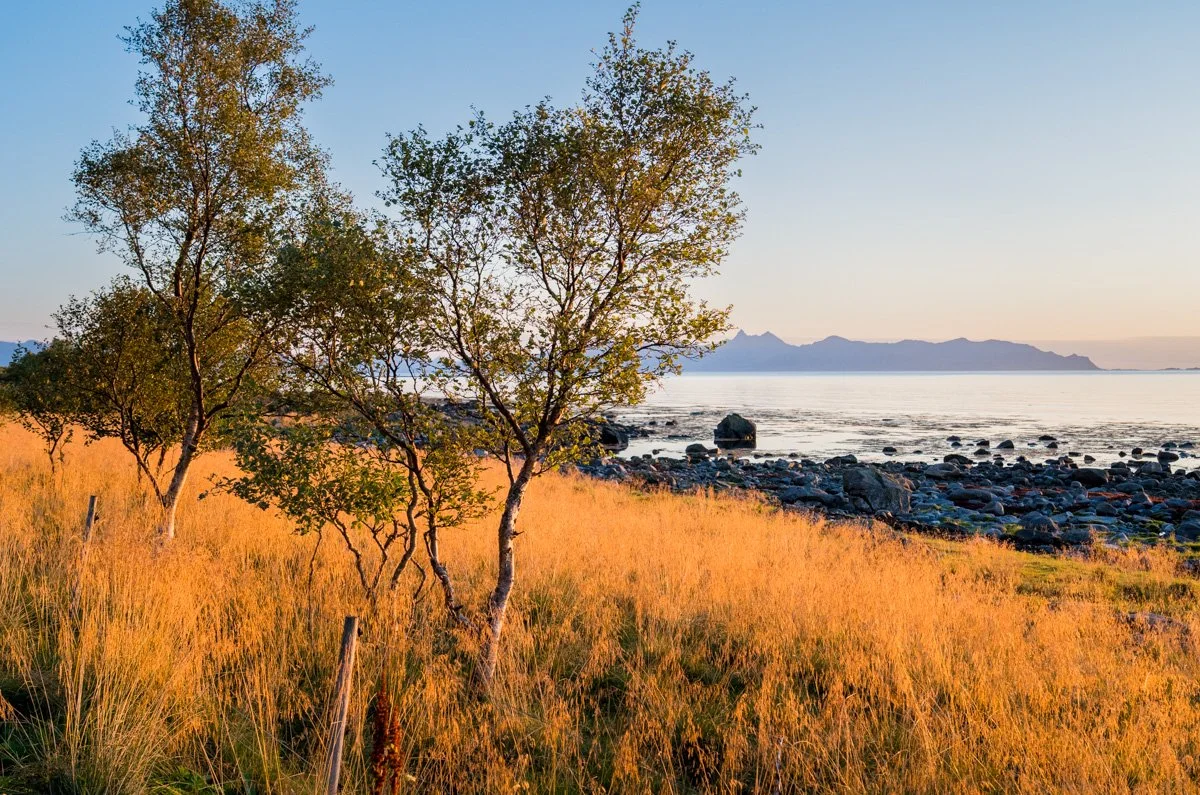
Both the Lofoten and Andøya Scenic Routes offer jagged, often pyramidal mountains, with waterfront cabins and white sand beaches with turquoise water. However, there are also some differences. Having visited Lofoten a few times before I visited Andøya, here are the things about Andøya that I noticed.
Lofoten has so many famous scenes that visiting can sometimes feel like ticking off a list rather than discovering things yourself. In contrast, Vesterålen in general is not as famous for photographers. Although the scenery is lovely, there is not a “wish-list” of famous Instagram locations. I like this - it gives you a feeling of exploring and using your own creativity.
Andøya’s Scenic Route (58 km) is far shorter than Lofoten’s (230km) – and as a result, there are fewer viewpoints in general (although it also takes much less time to drive, of course).
Lofoten is famous for views of red rorbuer cabins teetering on the edge of wave-fringed rocks, and steep fjord-like coastline. Andøya has fewer of both of these. There are relatively few cabins in craggy locations. And although it does have some craggy coastline, Andøya is not as unrelentingly steep as Lofoten, and does not have many fjords (there are fjords elsewhere in Vesterålen, though). If you do want classic fjord scenery, Senja is a very good bet.
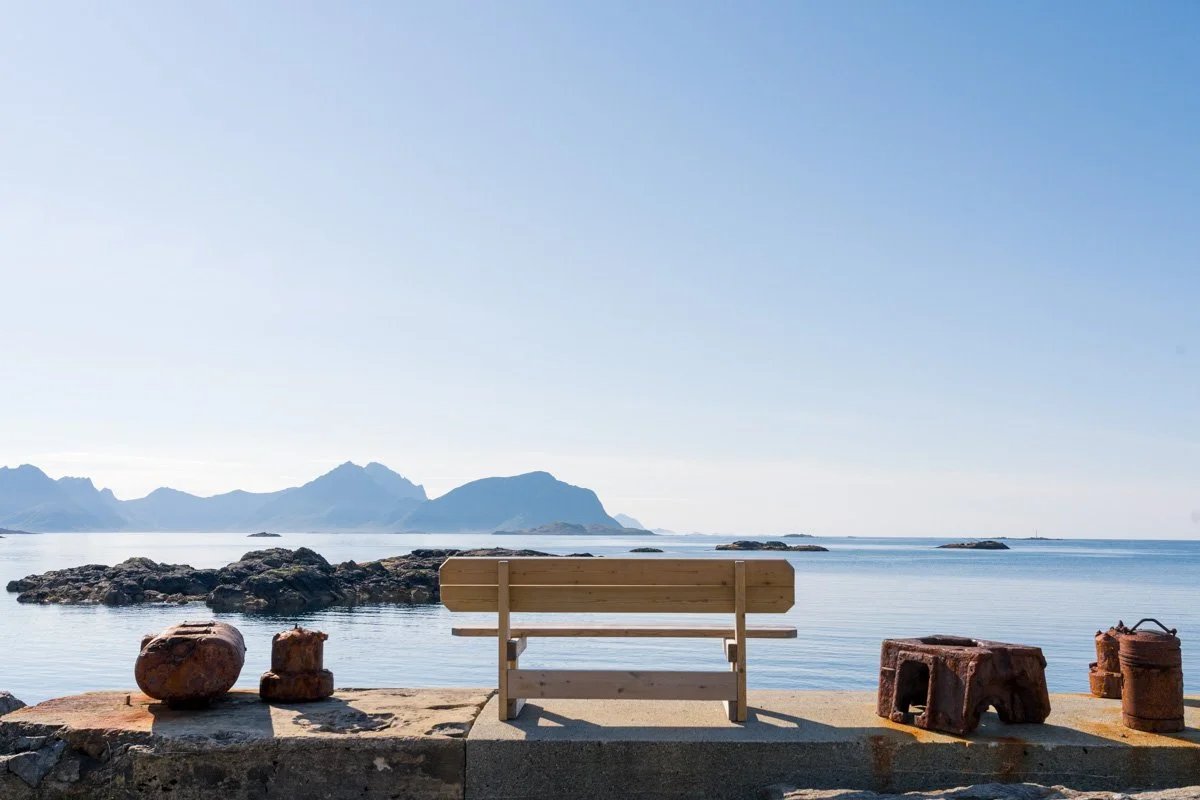
Andøya is well-endowed with many fabulous beaches of soft white sand, attractive for families and for camping. Rather unlike Lofoten, it has also areas of flat meadows and wildflowers in between the peaks, along with coastal lagoons, marshlands and bogs.
Andøya (and Vesterålen as a whole) is prime for Arctic wildlife spotting. Lofoten of course does have fine wildlife – I’ve seen sea eagles and Arctic hares in Lofoten, and once I even saw a weasel at Hamnøy! However, Vesterålen’s more varied environment creates a wider range of habitats, and deep water just offshore attracts fish, whales and seabirds in large numbers. You can find sea eagle, gannet and puffin safaris, whale-watching trips, and moose safaris here.
Finally – a big point – Vesterålen is far, far less visited than Lofoten. Andøya is probably the most-visited area of Vesterålen, and is certainly not deserted - it’s popular with campers and Norwegian families – but it’s fair to say that there aren’t the same crowds that you see in Lofoten. As a result, the whole experience of visiting Andøya is a little calmer and more peaceful.
Useful links and sources of information
Here are links that may be helpful:
Tourist information at Visit Vesteralen and at the Northern Norway Tourist Board
Searchable ferry timetables are here and bus time tables for Vesterålen
Heart My Backpack and Life In Norway are both wonderful blogs, packed with heaps of useful information if you are planning a trip to Norway
If you want to explore Norway’s National Tourist Scenic Routes (Nasjonale Touristveger) you can read about all 18 routes here
You’ll need access to good quality weather forecasts to plan your photography sessions. In Norway I use yr.no
Many tourist-oriented businesses here are very seasonal, and have reduced hours, or shut down completely, during winter. “Winter” can be very long! In my experience, tools like Google Maps can get confused by seasonal variations, so check opening hours and dates with the business’s own website/Facebook page/Instagram before making a special trip. Be prepared for impromptu closures on quiet days.